-
Products
- Products
- Fire resistant cables
- Power cables 1-145 kV
- Building cables
- Pre-wired installation cables in conduits
-
Specialty LV cables and flexible cords
- Overview
- TITANEX® H07RN-F 450/750 V
- H03V2V2-F (RKK 90) 300/300 V
- H03VVH2-F (SKX-U) 300/300 V
- H05V2V2-F (RKK-S 90GR) 300/500 V
- H05VVH2-F (RKX) 300/500 V
- H05VV-F (RKK) 300/500 V
- H03V2V2H2-F (SKX-U 90GR) 300/300 V
- H03VV-F (SKK) 300/300 V
- PUREAX (H07BQ-F)
- RKX 90
- S03Z1Z1H2-F (SQX) 300/300 V
- H05Z1Z1-F (RQQ) 300/500 V
- Robotic lawnmower wire H05Z1-K (RQ) Tinned 300/500 V
- NOAC-E HFFR 300/500 V (S05Z1A7Z1-F)
- Telecom - LAN - security
- Industrial cabling
- Accessories
- Your business
- News
- Support and Tools
- We are Nexans
- Sustainability at Nexans
- Search
- Contact us
- Compare
- Sign in
Products and Solutions
Frozen cable?
Jan 12, 2026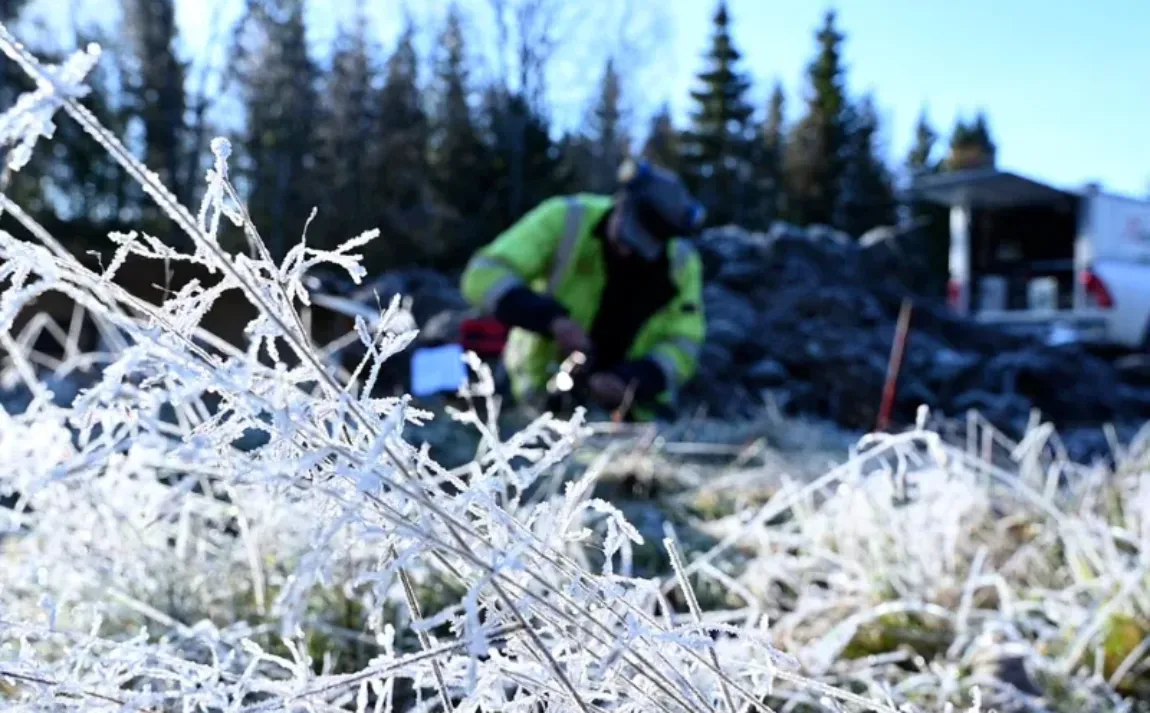
Cold and cables – what really happens?
Here we explain how cold affects cables, which standards apply, and what you as an installer, designer, or purchaser should know to avoid unnecessary surprises during the winter.
When temperatures fall, the properties of a cable change. The effect depends on the type of cable, material, and conditions, but in general, the following applies:
Material stiffens:
Especially PVC – but also other plastics – becomes hard and brittle, increasing the risk of cracks when bending or subjected to impact.
Mechanical sensitivity increases:
The cable can withstand less handling and stress in cold conditions.
Insulation resistance changes:
This can affect measurement results, so always try to perform tests under consistent conditions.
Cable installation becomes more difficult:
The risk of sheath and conductor damage increases significantly when laying cables in subzero temperatures.
Standards and manufacturer recommendations
According to current standards, both the minimum allowed storage temperature and minimum installation temperature are often specified. These should not be confused. It is not uncommon for a cable to be stored down to -20 °C but require at least 0 °C during installation.
Examples:
PVC-sheathed cable: usually minimum 0 °C for installation
HFFR-sheathed cable: 0 °C. With special care and if the cable is not exposed to impact or sharp bends, HFFR cables can be installed at temperatures down to -10 °C.
PE-sheathed cable: sensitive to mechanical stress in cold but can be installed down to -20 °C
PUR or rubber: generally better cold resistance, down to -20 °C
When installing at lower ambient temperatures, the cable must be preheated, and during installation, it must not drop below the minimum allowed temperature.
Tip: Always check the manufacturer’s datasheet, not just the product sheet.
Choose the right cable type – and handle it correctly
Cold itself is not dangerous, but the combination of the wrong cable type and improper handling can be. Always preheat cables that will be installed in cold conditions. Once laid and stationary, cables can withstand low temperatures.
Choose cables with properties suited to the climate:
-
For outdoor use in cold climates: select cables manufactured and tested according to Nordic standards.
-
Avoid PVC in environments where the cable risks being bent when cold.
-
Plan your work so that cables have time to acclimate if they have been stored in the cold.
So, before you pull a cable out of the van in the winter darkness: check the cable’s temperature, flexibility, and rating. It’s not a waste of time – it’s the difference between a durable installation and a cracked failure in February.
Warm up by checking the cold facts in the datasheets at Nexans.se
.png/jcr:content/Namnl%C3%B6s%20design%20(17).png)
Tip box: 5 things to consider when working with cables in cold conditions
✓ Consider if the cable has been stored overnight in a vehicle – the material may have frozen.
✓ Never install a frozen cable directly – always acclimate before pulling.
✓ Do not bend cables below the minimum temperature – risk of internal and external cracks.
✓ Avoid impact – handle carefully during transport, loading, and unloading.
✓ Protect your hands – wear gloves. In cold weather, cables are not only stiff but can also become unexpectedly slippery. This increases the risk of slipping knives, cuts, and poor grip. Use gloves that protect against both cold and sharp tools. Your hands are your most important tool, and you don’t want to sacrifice them for a quick installation.
Our websites
Select your country to find our products and solutions
-
Africa
- Africa
- Ghana
- Ivory Coast
- Morocco
- North West Africa
- Americas
- Asia
- Europe
- Oceania