-
Products
- Products
- Fire resistant cables
- Power cables 1-145 kV
- Building cables
- Pre-wired installation cables in conduits
-
Specialty LV cables and flexible cords
- Overview
- TITANEX® H07RN-F 450/750 V
- H03V2V2-F (RKK 90) 300/300 V
- H03VVH2-F (SKX-U) 300/300 V
- H05V2V2-F (RKK-S 90GR) 300/500 V
- H05VVH2-F (RKX) 300/500 V
- H05VV-F (RKK) 300/500 V
- H03V2V2H2-F (SKX-U 90GR) 300/300 V
- H03VV-F (SKK) 300/300 V
- PUREAX (H07BQ-F)
- RKX 90
- S03Z1Z1H2-F (SQX) 300/300 V
- H05Z1Z1-F (RQQ) 300/500 V
- Robotic lawnmower wire H05Z1-K (RQ) Tinned 300/500 V
- NOAC-E HFFR 300/500 V (S05Z1A7Z1-F)
- Telecom - LAN - security
- Industrial cabling
- Accessories
- Your business
- News
- Support and Tools
- We are Nexans
- Sustainability at Nexans
- Search
- Contact us
- Compare
- Sign in
Power networks - distribution
You reap what you know – Skellefteå Kraft tests Nexans AML 1 kV
Oct 20, 2026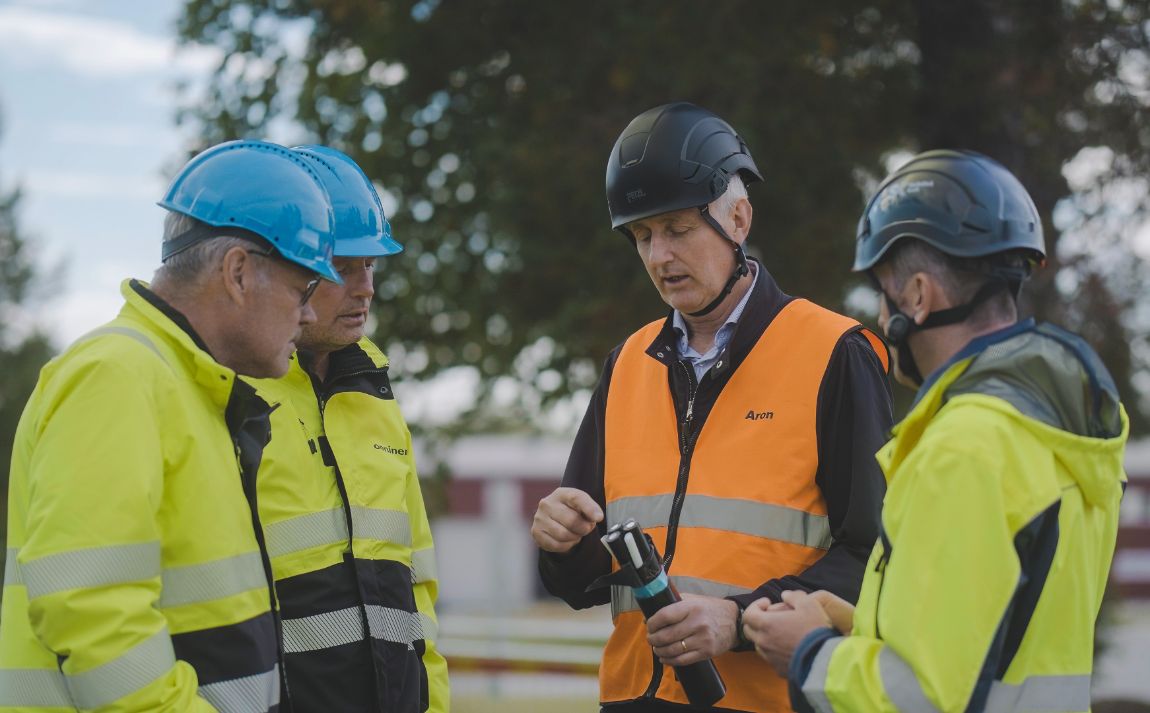
Skellefteå Kraft tests Nexans AML 1 kV in a pilot project in Norsjö, Sweden.
YOU REAP WHAT YOU KNOW.
One black cable replaces another. Then it gets buried. Hardly a crowd-puller. But for Skellefteå Kraft, it could be an important step towards reducing the climate impact of building the power grid. Aron Andersson, Product Manager for Power Grids at Nexans, was on site and spoke to Jimmy Lundström about why Nexans AML made it into the ground – and what it needs to deliver to stay on the materials list
Jimmy oversees local grid investment projects at Skellefteå Kraft. Investments, material choices and follow-up are all part of the day job. When a property in the heart of Norsjö needed more capacity, including for EV chargers, he spotted an opportunity to try a different cable.
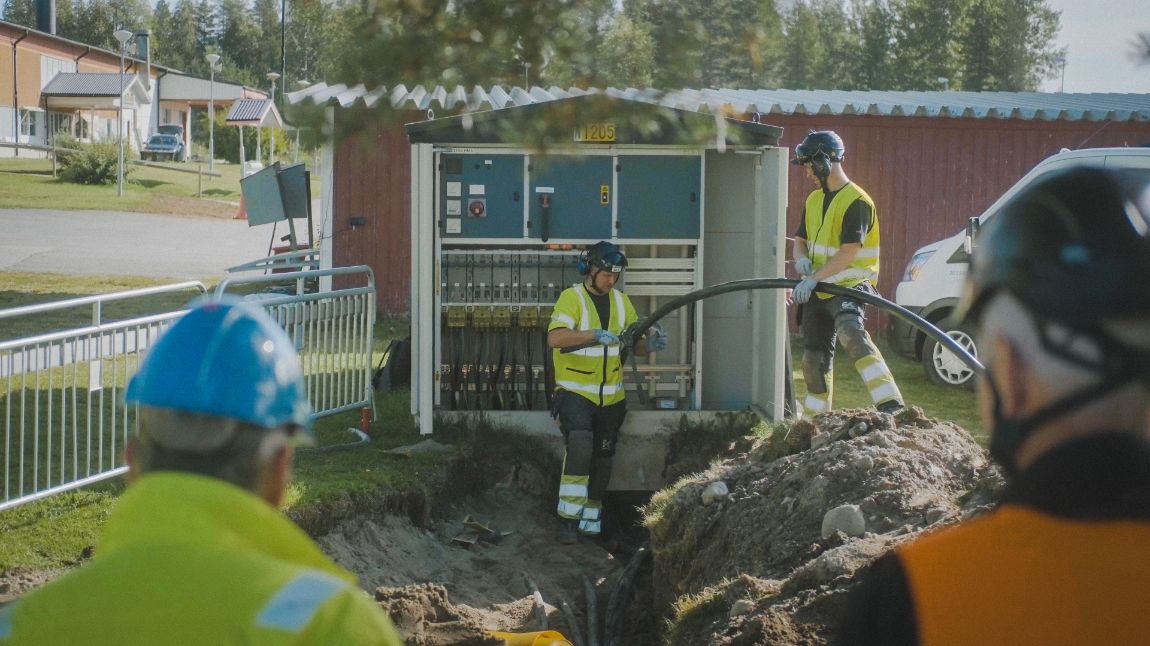
Two Nexans AML cables with a conductor cross-section of 240 mm², a hybrid excavator and a pilot project with one clear question: how can we reduce the climate impact of the work without compromising what the power grid is actually there to do?
Jimmy, what exactly have you been sowing here?
We needed to increase the power supply capacity to a property and chose to use the project to explore ways of reducing climate impact. Cable selection was an important part of that. We used Nexans AML and also hired a hybrid excavator to reduce emissions from the groundwork. This gave us an opportunity to test the solutions in a real project.
Why AML?
We have used Nexans low-voltage cables for many years and have had good experiences with them. Climate impact also carries significant weight when we select materials. AML combines the performance we need with a lower reported climate impact than equivalent cable alternatives. That made it a good fit for the pilot project.
Black cable. Black cable. Where’s the difference?
The difference is most evident in the climate impact data. Nexans reports up to 50% lower climate impact for AML compared with an equivalent N1XE cable*. That matters to us because cables account for an important share of the materials we use when building power grids.
Cable choices can make a significant difference to our carbon reporting, even if the change isn’t visible from the outside. We replace one black cable with another – and then bury it.
* CO₂e reduction calculated using third-party-certified life cycle assessments (LCAs) in accordance with the EPD standard EN 15804+A2.
PEP No: NXNS-00363-V01.01 (AML). PEP No: NXNS-00362-V01.01 (N1XE).
So you’re counting more than just metres?
Yes, we need to track climate impact and understand which measures make a difference. I’m part of the group that publishes the EBR Climate Calculator, where my contribution has been proofreading. It’s a tool for calculating the climate impact of individual projects or a year’s local grid operations. It helps us assess the effects of different material choices and working methods, for example.
How does Nexans stack up against the alternatives?
Among the cable alternatives we have looked at, we haven’t yet found another manufacturer offering the combination of performance and reported climate impact we’re looking for. That made AML particularly interesting for us to try.
But a cable has to do more than look good in a report, right?
Absolutely. It must meet our technical requirements and relevant standards. Robustness is another very important factor. We need a cable that can withstand installation and perform reliably over time.
For example, we use a lot of Nexans Duolex because of its robustness. Since switching to it, we haven’t had any installation damage to that cable. Experiences like that carry significant weight when we select materials.
New cable. Raised eyebrows from the installers?
The installers’ experiences matter. When a cable works well, people naturally want to keep using it. A new alternative therefore needs to work in practice too, ideally without requiring changes to working methods.
What gave you the confidence to break ground?
We had seen the cable and spoken to Nexans at trade shows. Then our partner Onninen suggested using AML for this particular pilot project. Our previous experience, the dialogue with Nexans and Onninen’s support gave us confidence throughout the process.
What did you hear on site?
What surprised me most was how quiet it became when the hybrid excavator was running. We were working right in the middle of town, so it made a noticeable difference on site.
And the cable? What have the installers said so far?
The feedback I’ve received is that it felt much like the cable they’re used to. They found the plastic slightly harder, but the cable itself more flexible when bending it and getting it into tighter spaces.
And the price tag? Anything to dig into there?
The purchase price is slightly higher, and like many others, we need to keep costs under control. That means considering the investment as a whole. If the cable provides the capacity, reliability and robustness we need, while the installers are happy with it, the additional cost can be justified. Avoiding damage and rework matters both financially and practically. A lower purchase price doesn’t always mean a lower cost over time.
A pilot project or the start of something bigger?
We still have a few final reports to complete before the follow-up is finished. But based on our experience so far, I expect us to use AML extensively in the future.
Thanks, Jimmy!
Jimmy has received the feedback. But distribution electrician Oskar Eklund has actually had his hands on the cable. In part 2, we move from material choices to ground level. What was AML like to lay, bend and get into place? And does Oskar agree with what Jimmy has just told us?
We’ll be digging deeper into that. Don’t miss part 2, coming next week.
Our websites
Select your country to find our products and solutions
-
Africa
- Africa
- Ghana
- Ivory Coast
- Morocco
- North West Africa
- Americas
- Asia
- Europe
- Oceania