-
Products
- Products
- Fire resistant cables
- Power cables 1-145 kV
- Building cables
- Pre-wired installation cables in conduits
-
Specialty LV cables and flexible cords
- Overview
- TITANEX® H07RN-F 450/750 V
- H03V2V2-F (RKK 90) 300/300 V
- H03VVH2-F (SKX-U) 300/300 V
- H05V2V2-F (RKK-S 90GR) 300/500 V
- H05VVH2-F (RKX) 300/500 V
- H05VV-F (RKK) 300/500 V
- H03V2V2H2-F (SKX-U 90GR) 300/300 V
- H03VV-F (SKK) 300/300 V
- PUREAX (H07BQ-F)
- RKX 90
- S03Z1Z1H2-F (SQX) 300/300 V
- H05Z1Z1-F (RQQ) 300/500 V
- Robotic lawnmower wire H05Z1-K (RQ) Tinned 300/500 V
- NOAC-E HFFR 300/500 V (S05Z1A7Z1-F)
- Telecom - LAN - security
- Industrial cabling
- Accessories
- Your business
- News
- Support and Tools
- We are Nexans
- Sustainability at Nexans
- Search
- Contact us
- Compare
- Sign in
CSR
Circularity in practice – cables developed for recycling and reduced climate impact
Apr 2, 2026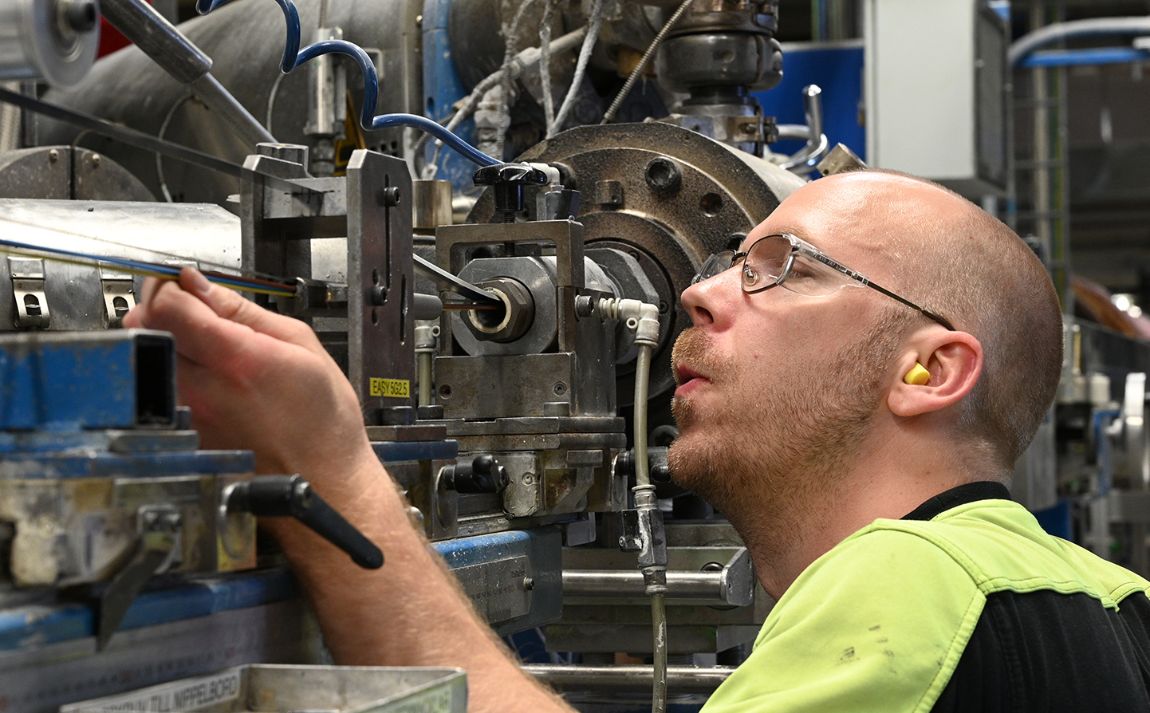
When RISE recently brought together stakeholders from the plastics industry at the conference The Circular Plastic 2026, Nexans Material Lab participated—represented by manager Pernilla Elfving—as one of the speakers. The focus was on how circularity can be put into practice in the cable industry.
A concrete example is Nexans AMCL 12/24 kV—a robust design that combines recycled material with materials that can in turn be recycled or reused. The result is a cable with high technical performance while reducing both Nexans’ and customers’ climate impact from the cable.
- Thermoplastic insulation (TPI) – the insulation material is fully remeltable, which in the long term enables reuse of production scrap in new cables.
- Sheath with recycled material – the cable sheath contains 45 percent recycled polyethylene, which can be recycled again when the cable has reached end of life.
- Low-carbon aluminium – the conductor is produced using electricity from renewable sources, reducing the cable’s carbon footprint.
- Local production in Grimsås – manufacturing with renewable electricity and shorter transport distances both contribute to a lower overall carbon footprint.
-
Recycled material – opportunity and challenge
Working with recycled material requires careful control. Nexans carries out extensive testing to ensure that the cable’s quality and properties always meet applicable standards, such as Swedish electrical standards—regardless of whether the material is recycled or new.
Colour variations and differences in surface finish are natural when recycled material is used. The cables may therefore look and feel different, but the change does not affect functionality or electrical properties.
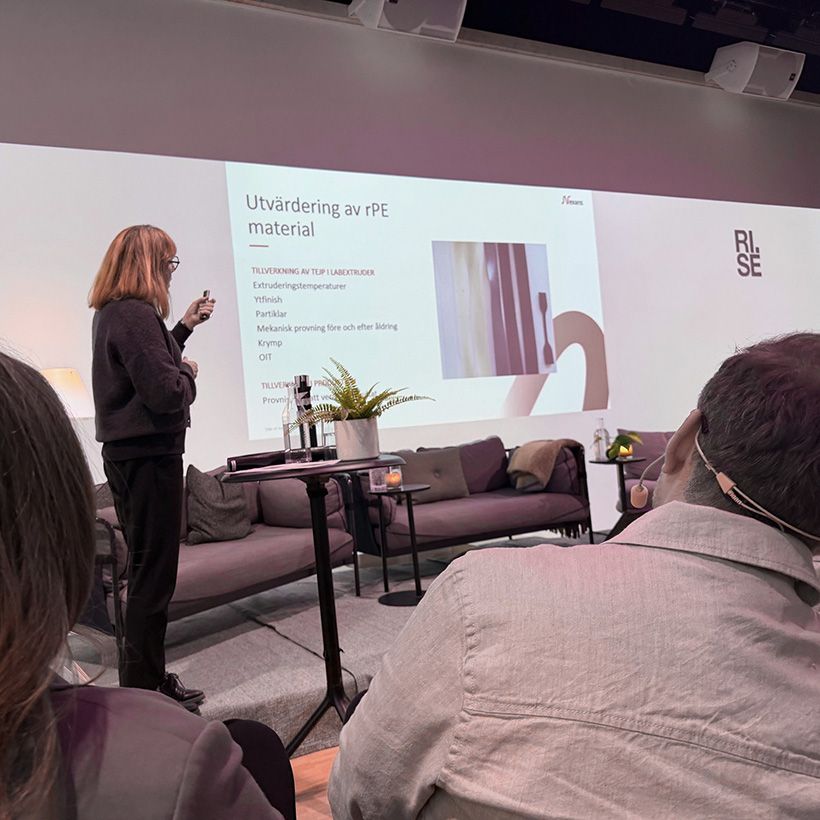
– Today, we apply a surface layer of virgin material on top of the sheath with recycled content to achieve a smooth and even surface. In the long term, it may be possible to accept a rougher surface, if there is an understanding that it does not affect the cable’s performance, says Pernilla Elfving.
Picture from the conferenceThe Circular Plastic 2026
As both plastics and metals become increasingly limited resources, with potentially major economic consequences, a long-term perspective becomes crucial.
By integrating recycled material into our products already today, and ensuring that new materials—such as TPI—can be reused, Nexans uses resources more efficiently. As a customer, you also actively contribute to reduced climate impact and can strengthen your organisation’s sustainability goals by choosing tangible circular solutions that also secure material availability over time.
It is precisely this combination—practical experience from Swedish cable manufacturing and a clear ambition to reduce climate impact—that Nexans wants to contribute to the industry’s continued transition.

Our websites
Select your country to find our products and solutions
-
Africa
- Africa
- Ghana
- Ivory Coast
- Morocco
- North West Africa
- Americas
- Asia
- Europe
- Oceania